Edtech and Media
Committee Mission
ICT as an enabler – Connecting People, Transforming Ideas, Enabling the Future
Overview
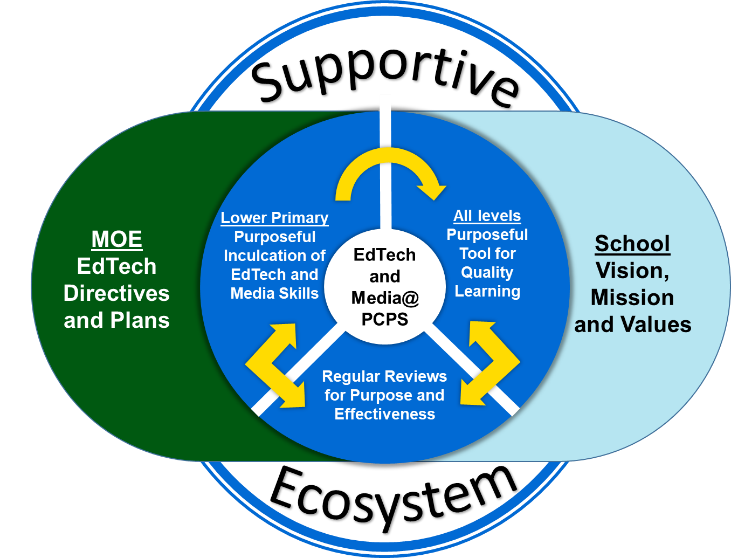
The EdTech and Media Committee plays a pivotal role in advancing the strategic integration of New Media and Information and Communications Technology (ICT) across the school. Our mission is to enhance the quality of teaching and learning through purposeful technological adoption, fostering connections within our school community, enhancing pedagogical practices, and preparing our students for future success.
Our approach is grounded in a comprehensive understanding of both students' and teachers' readiness levels in utilising New Media and ICT tools. Through close collaboration with various departments, we design and implement customised technology-enhanced programmes that align with specific learning objectives whilst remaining firmly rooted in our school values of Mindfulness, Empathy and Care. All initiatives are developed in accordance with the MOE EdTech Masterplan 2030 and the Digital Literacy and Technological Skills framework, ensuring coherence with national educational priorities.
The committee operates within a robust and supportive ecosystem that emphasizes continuous improvement. Regular reviews are conducted to ensure our programmes maintain alignment with MOE national initiatives and support broader school initiatives. This systematic approach enables us to remain responsive to evolving educational needs whilst maintaining high standards of implementation.
Our overarching goal is to harness New Media and ICT productively in support of the total curriculum, creating meaningful learning experiences that develop our students into curious lifelong learners, confident leaders, and responsible innovators equipped for the demands of an increasingly digital world.
Key Programmes
New MICT lessons
The New Media and ICT (New MICT) curriculum provides structured, explicit instruction in baseline EdTech and Media skills for Primary 1 and Primary 2 students through two dedicated periods per week. The curriculum is carefully designed to introduce foundational skills systematically, whilst providing students with authentic opportunities to apply their learning through different level-based projects. Students are empowered to exercise choice in their creative processes, fostering both technical proficiency and independent thinking.
By the end of Primary 2, students will have developed fundamental competencies across a range of digital skills and platforms, including touch typing, Microsoft PowerPoint, Microsoft Word, and introductory coding. This foundation equips students to work and learn more independently and effectively with ICT tools throughout their subsequent years of education.
The competencies acquired during the New MICT lessons serve as essential building blocks that enable meaningful technology-enhanced learning across the total curriculum. These skills are strategically leveraged in later years to support deeper engagement with New Media and ICT-infused learning experiences, ensuring that our students develop as confident and digitally empowered learners.
|
New MICT Curriculum |
|
|---|---|
|
Primary 1 |
Primary 2 |
|
Account management and navigation |
Touch Typing via MS Word (About me) |
|
Touch Typing |
Coding |
|
MS PowerPoint
|
Google Docs (P2 ALP – Giving advice) |
|
MS PowerPoint
|
Stop-Motion Animation |
|
Cyber Wellness (Staying safe in the Cyber World) |
|
Developing responsible users for safe interaction with technology
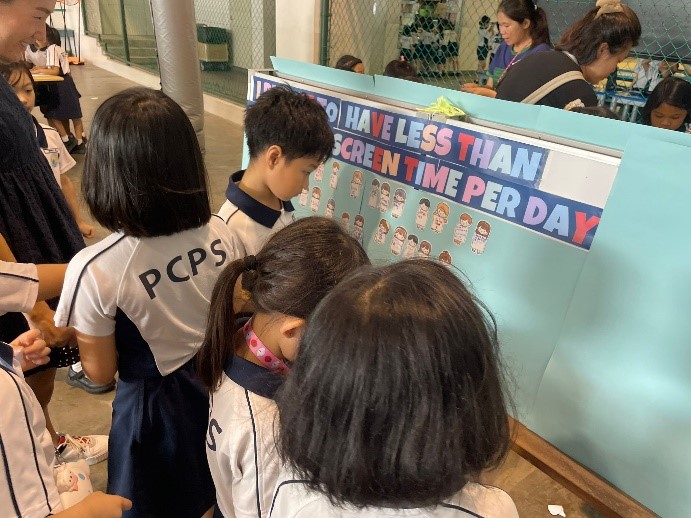
The Cyber Wellness programme at PCPS is designed to cultivate responsible digital citizenship by raising awareness and equipping students with the knowledge and skills necessary to navigate the online environment safely and responsibly. The programme enables students to understand appropriate online behaviour and empowers them to take ownership of their well-being in cyberspace.
Cyber Wellness education is delivered through multiple touchpoints to ensure comprehensive coverage. Core lessons are conducted during the weekly Form Teachers' Guidance Period (FTGP), complemented by the integration of cyber wellness themes within the Character and Citizenship Education (CCE) curriculum and relevant academic subjects where appropriate. This multi-faceted approach ensures that cyber wellness principles are consistently reinforced across the curriculum.
In collaboration with the Student Leadership Committee, the school develops and nurtures a dedicated group of Cyber Wellness Ambassadors. These student leaders promote a positive cyber culture within the school community, championing cyber wellness initiatives through various platforms and peer-led activities.
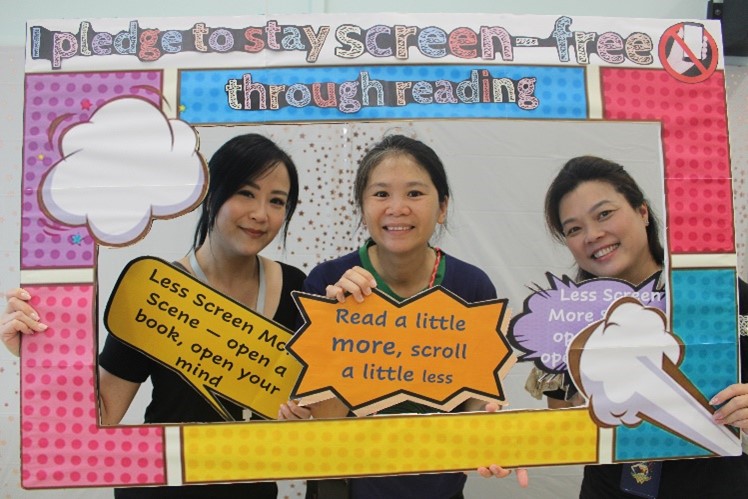
For more information about this programme, click this link: https://www.punggolcovepri.moe.edu.sg/pcps-experience/Programme/cyber-wellness/
Coding
In alignment with IMDA’s Smart Nation 2.0 and MOE’s EdTech Masterplan 2030, the Code for Fun programme teaches and guides our students to become curious, confident and creative users of technology, equipping them with essential skillsets for success in a digital future.
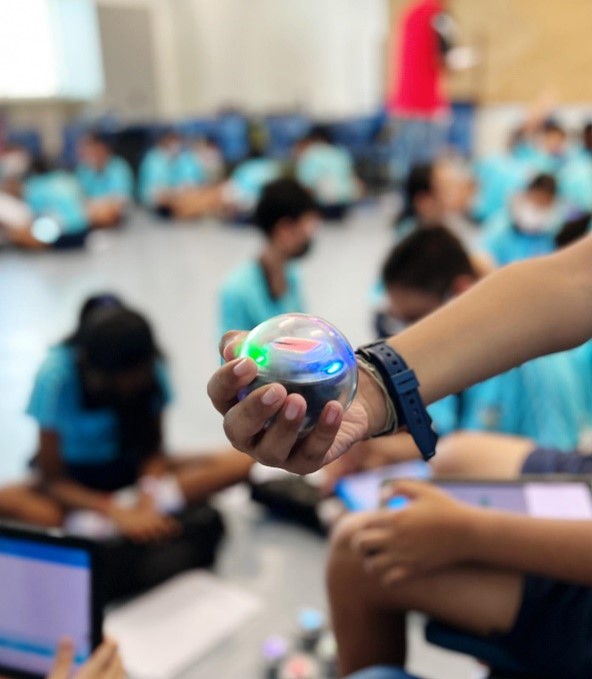
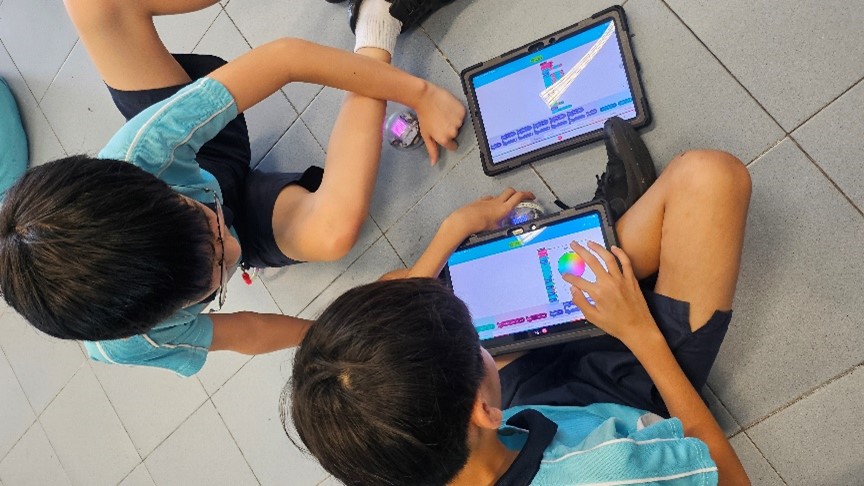
The programme provides foundational exposure across key areas of digital literacy, including Computational Thinking, coding through robotics, and introduction to emerging technologies. Through hands-on learning experiences, students develop problem-solving capabilities and gain practical understanding of how technology shapes the world around them.
At PCPS, Primary 4 and Primary 6 students participate in the Code for Fun programme as part of their post-End of Year examinations and post-PSLE activities respectively. These enrichment sessions are designed to excite students about new opportunities in the digital economy whilst establishing a strong foundation in digital skills. Through this structured exposure, students are better prepared to engage with increasingly sophisticated technology in their future educational journey.